
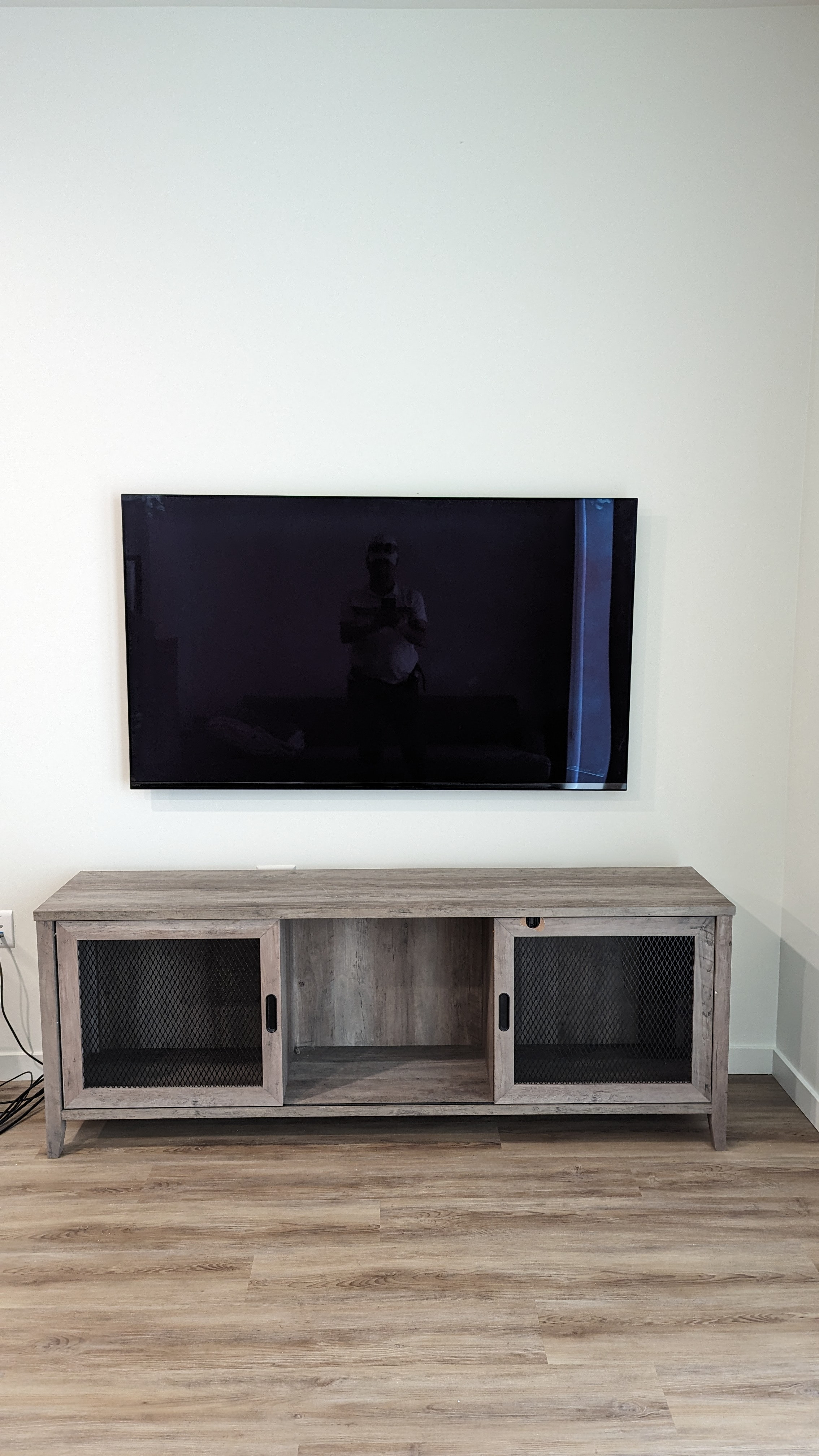
Why Hiding TV Wires Matters
You spent good money on a beautiful wall-mounted TV. But if there's a tangle of black cables dangling down the wall to your outlet and cable box, it looks terrible. It's the single most common complaint we hear from homeowners who had their TV mounted by a handyman or did it themselves: "The mount is fine, but the wires look awful."
After 1,100+ TV installations across Sacramento, wire concealment has become one of our most popular services. This guide covers every way to hide TV wires - the code-legal in-wall method, paintable raceways, options that don't require cutting the wall at all, what to do on brick and stucco, and what it costs to have a pro handle it.
Every Way to Hide TV Wires (Quick Comparison)
| Method | Best For | Cuts Into the Wall? | Renter Friendly? |
|---|---|---|---|
| In-wall routing + recessed power kit | Drywall walls in a home you own | Yes | No |
| Paintable cable raceway | Brick, stone, stucco, rentals | No | Yes |
| Cable management sleeve | Quick tidy-up, desks | No | Yes |
| Furniture placement | TV above a console or dresser | No | Yes |
| Decorative cover-ups | Short cable runs | No | Yes |
Method 1: In-Wall Wire Concealment (The Gold Standard)
This is what we do most. It's the cleanest possible result - completely invisible wires, including the power cord.
How It Works
We cut two small openings in the drywall: one behind the TV and one behind your furniture or near the floor outlet. HDMI, audio, and signal cables are routed through the wall cavity between the two openings. A recessed power box is installed behind the TV so even the power cable is hidden.
Why You Can't Just Run the Power Cord Through the Wall
Here's something most people don't know: it's against electrical code to run a TV power cord or extension cord inside the wall. The National Electrical Code (NEC 400.12) prohibits flexible cords - lamp cords, extension cords, the cord that came with your TV - from being run through walls, ceilings, or floors. Their insulation isn't rated for in-wall use, they can't shed heat inside a closed wall cavity, and a damaged cord behind drywall is a genuine fire hazard. If a fire ever starts and the investigator finds an extension cord in your wall, that's an insurance conversation you don't want to have.
The code-compliant answer is an in-wall power relocation kit: a recessed outlet behind the TV, an inlet plate near your existing outlet, and in-wall-rated cable (the same Romex-type wire used in your home's walls) connecting the two. The kit then plugs into your existing outlet with a short jumper cord - outside the wall, where cords are allowed. Because you're not splicing into your home's wiring, most of these kits are designed to be installed without an electrician.
We install these recessed power kits on every in-wall concealment job. It's the right way to do it.
The In-Wall Kit Walkthrough (How We Actually Do It)
Watch for Fire Blocks
Many Sacramento homes - especially two-story houses and anything built to modern code - have horizontal blocking between studs partway up the wall. If a fire block sits between your two openings, the cables can't drop straight down. Pros handle this with a flexible drill bit or a third small opening at the block; it's the number one reason a "simple" DIY in-wall job stalls at the halfway point.
What You Need
Pros and Cons
Pros: Completely invisible, code-compliant, clean professional look, adds home value Cons: Requires drywall (not masonry), requires cutting into walls, best done by a professional
Method 2: Surface-Mount Cable Raceways (Cord Covers)
When in-wall routing isn't possible - like on brick, stone, or stucco walls - a surface-mount raceway is the next best option.
How It Works
A plastic or metal channel attaches to the wall surface, running from behind the TV down to the outlet. All cables run inside the channel, and the power cord is allowed here because it's outside the wall. We paint the channel to match your wall color so it blends in.
When to Use This Method
Tips for Best Results
How to Hide TV Wires Without Cutting the Wall (Renters)
If you rent - or you just don't want to open up drywall - you can still get a clean look. Here's the no-cut playbook:
For most renters, a painted adhesive raceway is the answer: cheap, invisible from across the room, and fully removable.
Hiding TV Wires on Brick, Stucco, and Stone
Sacramento homes throw every wall type at us, and the wire-hiding answer changes with the material:
Mounting on one of these surfaces in the first place? That's our specialty - see our stucco, brick, and stone TV mounting service.
What Professional Wire Concealment Costs
Honest numbers, because "call for pricing" annoys everyone: our minimum service visit is $150, which covers a standard TV mounting - wire concealment is not included in that base price. In-wall concealment of HDMI or network wires typically adds $75 to a mounting job; things like fire blocks, masonry, or extra cable runs can add time and cost. We quote your exact price up front before any work starts, with no hidden fees.
For most homes, the full package - mounting plus in-wall concealment - lands well under what people expect, and the concealment portion typically takes just 30-60 additional minutes. If you already have a mounted TV with dangling wires, we do concealment-only visits too: that's our TV wire concealment service.
Hide TV Wires FAQ
How do you hide TV cables in the wall?
Cut two openings in the drywall within the same stud bay - one behind the TV, one near the outlet - and fish the HDMI and signal cables down the wall cavity between them. For power, install an in-wall rated power relocation kit with a recessed outlet behind the TV. Never put a regular power cord or extension cord inside the wall.
Can I run my TV's power cord inside the wall?
No. Flexible power cords and extension cords are prohibited inside walls by electrical code (NEC 400.12) because they're a fire hazard in a closed cavity. Use an in-wall power kit with in-wall-rated cable instead - it's code-compliant and most kits install without an electrician because they plug into your existing outlet rather than splicing into house wiring.
How do I hide TV wires without cutting the wall?
Use a paintable cable raceway - a slim channel that sticks or screws to the wall surface and holds all the cables, including the power cord. Painted to match the wall, it nearly disappears. It's the go-to for renters, brick and stucco walls, and anyone who doesn't want to open drywall.
How much does it cost to hide TV wires?
DIY, an adhesive raceway runs about $15-40 in materials and an in-wall power kit around $50-100. Professionally, our service visits start at $150 for a standard TV mounting, and in-wall concealment of HDMI or network wires typically adds $75 on top of that - quoted up front based on your wall. Most concealment work adds 30-60 minutes to a mounting job.
What about cable management behind the wall - can I add more wires later?
Yes - that's a real advantage of doing in-wall concealment properly. Once the two openings and the route exist, pulling an extra HDMI or ethernet cable through later is a five-minute job. We often leave a pull string in the wall cavity for exactly that reason.
How do I hide TV wires on a brick fireplace?
You can't go inside brick, so use a surface raceway painted to match the brick or run along a grout line where its shadow hides it. On fireplaces we also route behind mantels and stone edges when the surround allows. This pairs with our fireplace TV mounting installs, where heat and cable routing get planned together.
Ready for Clean, Wire-Free Walls?
If you're in Sacramento and want your TV wires concealed the right way, call or text Dan's TV Mounting at (916) 234-5202. We handle in-wall routing, recessed power kits, painted raceways, and every wall type - and if the TV isn't on the wall yet, our professional TV mounting service in Sacramento can mount it and hide the wires in a single same-day visit. Most jobs take 30-60 minutes and the difference is dramatic.